

In This Blog:
-
-
- ➤#1. The $124 Trillion Generational Handoff
- ➤#2. Work From Anywhere Is Now Everywhere
- ➤#3. SMEs Against AI and The 82% Problem
- ➤#4. EV Demand and Supply Surge
- ➤#5. 11,400 Americans Turn 65 Today
- ➤#6. GLP-1s, Eating Differently, New Normal
- ➤#7. Cybersecurity Revenue Opportunity for SMEs
- ➤#8. Clubbing and Community (Loneliness Epidemic)
- ➤#9. Trade Businesses Without Heirs
- ➤#10. Smart Devices For Homes
-
What trends answer how to get rich fast in 2026 to 2030? Let’s first establish that trends do not build wealth in themselves. It’s the businesses and services built around them that do.
When it comes to wealth building strategies or wealth buildingl trends for remote business owners, take Airbnb and Shopify. Short-term rentals and e-commerce were the trends. But the way businesses “orbited” around them was where the money went:
One woman built a multi-million dollar cleaning company by focusing on Airbnb properties, and Andrew Wilkinson became a billionaire building Shopify themes while everyone else was trying, and failing, to build the next Shopify.
Your angle isn’t to directly compete with what’s trending, because chances are, you won’t be able to.
So, what do you do?
What the trend needs, who the trend creates, and what the trend leaves unsolved, that’s your market.
Here are 10 wealth building trends for remote business owners, each with a low-competition “orbit” where you can compete and actually win.
What business opportunities will make money from 2026 to 2030? (What business is booming in 2026?)
Wealth-building trends for online business owners are long-term market shifts that create new demand for services, products, and specialized expertise. From AI adoption and cybersecurity to aging populations, EV infrastructure, and digital healthcare, the biggest opportunities often come from supporting these industries rather than competing within them. Business owners who identify emerging gaps early and build practical solutions around them are generally better positioned for sustainable growth through 2030.
How to Build Wealth as a Business Owner: Why Remote Entrepreneurs Have the Advantage From 2026 to 2030
Ready with larger budgets to build wealth that doesn’t stay stagnant? That’s good, if you have it. If you’re building from the ground up, that’s okay too. Businesses that are willing to test new markets and launch new services are the ones that catch up better than those with enterprise-level finances. And those who are ready to expand capacity, too.
That’s the edge of remote business owners. Online business owners. Solopreneurs. Non-solopreneurs. You name it.
Small business owners are already going unconventional in the way they approach “growth.” AI adoption is accelerating, and remote work has become part of everyday operations. Owners are investing in digital tools that lower overhead instead of adding it, while expanding their workforce with offshore professionals. Businesses that embrace AI and flexible operating models and versatility in hiring (regardless of location) consistently report stronger growth than those that don’t. (U.S. Bancorp Investor Relations)
The questions business owners are asking have changed as well. “What’s the next big idea?” is now a piece of the traditional. They’re searching for things like “best business to start in 2026,” “AI for small business,” “how to scale without hiring locally,” and “what business is booming right now.” The common thread— finding a market that’s growing faster than the competition is trying to get ahead of.
As you go through the trends below, you’ll notice that every one of them creates new customers. New regulations. New administrative work. Marketing needs scraped from today (and not the previous decades). Changing customer support demands. Operational sngas and requirements.
Whether you’re building an agency, a service company, or an online business with a distributed team, the opportunity’s usually a step ahead of a published trend. Your first move isn’t to invent something in the market, but to become the specialist the today’smarket can’t do without.
What are the best ways to get rich from 2026 to 2030? (best wealth building strategies)
The best ways to get rich from 2026 to 2030 rely on positioning early around major demographic, tech, and behavior shifts, then solving the operational gaps they leave behind. Instead of trying to create trends, wealth is built by focusing on high-demand, low-competition services that help these massive shifts function at scale.
10 Wealth-Building Trends For Remote Business Owners: What’s The Best Way To Get Rich In 2026 to 2030?
What are passive income ideas for remote businesses?
This top 10 wealth building business trends for business owners list is categorized based on order of current U.S. market momentum.
#1. The $124 Trillion Generational Handoff: Next Big Opportunity For Wealth Advisors and Estate Planners
Baby Boomers are sitting on an enormous amount of accumulated wealth: $124 trillion in assets is set to change hands through 2048 (Cerulli), making this the largest generational wealth transfer in recorded history. $85 trillion of that goes directly to Gen X and Millennials, and the peak of that transfer will land between 2030 and 2035.
However, only 33% of Americans have a basic will or estate plan in place. 70% of wealthy families lose their wealth by the second generation. Only 19% of parents have discussed their full estate plan with their children.
The people inheriting this money are younger and less experienced with wealth management and passive income, if we can call it that. They’re actively looking for guidance.
That’s a new client base with new priorities and no established advisor relationships yet.
What To Do: If you’re in financial planning, legal services, accounting, or even coaching, this is the moment to build a practice around estate planning, wealth transition, and inheritance guidance for generational wealth. The clients are arriving whether the advisors are ready or not.
#2. Work From Anywhere Is Now Everywhere: Zero Remote Suburban Market Services
People have been moving out of cities. Suburban co-working grew 58% between 2023 and 2025 and is now larger than urban co-working, and growing. Still, most midsize suburban markets have almost nothing in terms of co-working supply.
Amazon mandated five days of on-site work for 350,000 employees. Paramount spent $185 million in severance enforcing its return-to-office policy. Remote work went up anyway, across various companies and sectors in the U.S.
“
Data driven analysis from Stanford’s work-from-home research lab, tracking data across three independent sources, found that 28% of all US paid workdays are now work-from-home. 88% of managers report no plans for a full return to office.
Work-From-Home Research Lab
Working from wherever you are is mainstream. It’s become a new culture.
For business owners pursuing any opportunity here, the bottleneck is in having the right people to execute without absorbing the cost of full local hires.
What To Do: Survey your suburban market. Remote work is permanent, and the people doing it have needs that go beyond a laptop: co-working spaces, home office setup and furniture, local internet solutions, meal delivery, and remote administrative support. If any of these are sparse or missing in your area, jump in.
#3. SMEs Against AI and The 82% Problem: AI Is Separating Small Businesses That Make It From Ones That Won’t
The failure of small to medium-sized businesses to adapt to AI and incorporate it in holistic financial planning is exactly your market.
The Small Business Administration’s Office of Advocacy found that 82% of small businesses believe AI simply isn’t applicable to their operations. SMEs who haven’t bought into artificial intelligence should go over the results of working alongside it.
Fortune reported in March 2026 that fewer than one in five businesses is effective at using AI in daily operations.
A dental practice that uses AI for appointment reminders sees a cut in no-shows from 28% to 14%, and recovers $4,800 per month in chair time. A plumber who adds an AI voice receptionist that connects to his offshore admin assistant gets after-hours bookings within three weeks.
AI isn’t reserved for big companies. Small businesses need it every bit as much. They just don’t have anyone offering it to them in a compelling way. Or in a way that makes sense to them.
What To Do: Pick one sector: dentists, HVAC, cannabis, restaurants, law firms, etc. Be the AI implementation specialist for that field. Once you present business owners with real numbers, they’ll see the value on their own.
#4. EV Demand and Supply Surge: Nobody’s Maintaining the Infrastructure Behind Them
EVs are everywhere, and calling it a trend at this point barely covers it. From Tesla to BYD, the race to build more, with every kind of tech upgrade, every new design that heightens road safety and passenger comfort, is accelerating full-throttle.
The National Renewable Energy Laboratory (NREL) indicated that presently, there are 240,000 public charging ports in the US alone. The government’s target by 2030 is to hit 28 million.
4 years to go, and it’s where you should be laying the groundwork right now. The window for commercial installation and the repair market is wide open.
NREL also verified that the commercial sector is adding 500 new installs per day. But most licensed electricians aren’t EVITP-certified, with some who haven’t heard of the credential.
Electric Vehicle Infrastructure Training Program (EVITP) Certification takes about 20 hours to complete online and costs $275. If you haven’t gone through it, change that.
What To Do: If you’re in or adjacent to electrical contracting, field services, or home services, pursue EV charger installation as your specialization. The certification program is readily available. Work on it immediately before the competition gets ahead.
While you’re preparing for financial growth, and as you contemplate expanding your remote team, here’s how to Calculate Outsourcing Cost US. Below is our Free Outsourcing Calculator, so you can see your own numbers (not online averages):
#5. 11,400 Americans Turn 65 Today: Too Few Specialists For A $9 Billion Home Renovation Market
Another spotlight on baby boomers. Census confirms that in 2026, around 11,400 Americans turn 65 every single day. 4.18 million people are aging into a stage in life when they no longer want to live elsewhere but in their residential private homes. (American Association of Retired Persons survey). This is popularly called “aging-in-place.”
Yet this age group is also eager to make their own homes a better, safer place.
The challenge is that only 1% of US homes are designed for safe aging. This is no exaggeration. Privately owned homes aren’t elderly-friendly, with most without lever handles, grab bars, ramp access, stair lifts, accessible switches, better lighting and wiring, and wider doorways.
What are the money trends in 2026? Alternative investments? Relatively common aging-in-place upgrades can become major investments, with grab bar installations reaching hundreds of dollars per fixture and electrical rewiring projects between $7,000 to $20,000 for full-home rewires.
What To Do: Add Certified Aging in Place Specialist (CAPS) certification to one or more of your team members this year. The National Association of Home Builders puts contractors in a national referral directory that insurance companies and occupational therapists (OT) use to refer clients.
#6. GLP-1s, Eating Differently, New Normal: No Local Services For This Group
Ozempic. Wegovy. These, and other popular GLP-1 medications, are among the top business trends 2026 has eyes on. They have 13 million Americans turning to them to reclaim their desired weight and battle against obesity.

A pill form of the drug received FDA approval in 2025; barrier-breaking, as it broadened access to potential new users who weren’t keen on the original injection version.
Medicare will be within its scope by July 2026. The healthcare insurance will begin to cover GLP-1s at a $50 per month per patient cap.
Their Eating Differently Is Your Opportunity
People on GLP-1 drugs restructure their dietary patterns so high-protein, nutrient-dense, portion-controlled meals become the new normal.
“
Cornell University research found that GLP-1 households cut grocery spend by 5.3% six months into the medication, shifting sharply toward protein and fresh produce.
GLP-1 Grocery Spend Study
GLP-1 meal prep delivery is becoming mainstream, yet it’s a breakout space with hardly any competition. Food tech company Tovala raised $61.9 million specifically to expand its meal delivery service to meet the dietary demands of the growing GLP-1 user base.
But there aren’t many stepping onto the lane of locally-focused GLP-1 meal prep services.
What To Do: If you want to learn how to get rich and you’re in food service, meal prep, or a health-adjacent business, establish your place in the market of locally focused GLP-1 meal programs. It’ll be a first-mover play for you. Work with a local weight-loss clinic or primary care practice for a referral arrangement.
#7. Cybersecurity Is the Most Overlooked Revenue Opportunity for US SMEs Right Now
43% of all cyberattacks in 2025 targeted small businesses (Data Breach Investigation Resources, Verizon). You’d think they’d break large corporations and government agencies more, but no. The reason is that SMEs are easier to breach.
Most SMEs operate without a dedicated IT team, without a formal security plan, and in many cases, without any cybersecurity budget. Or concern, really. 47% of businesses with fewer than 50 employees have zero allocated to cybersecurity (StrongDM, 2025).
The possibilities are difficult to pass up: annual prevention for a typical small business runs $5,000 to $15,000. A single ransomware recovery averages $120,000, and can go higher. Yet the majority of SMBs are unprotected, and cyberattacks are now considered the number one business concern among small business owners, surpassing inflation.
Global SMB cybersecurity spending is projected to hit $109 billion by 2026, growing at 10% annually. That’s the potential budget for those who’ll solve this problem locally.
What To Do: If you have an IT background or any cybersecurity training, SMB-focused cybersecurity consulting is a wide-open service category in most local markets.
Package it simply: an audit, a basic incident response plan, and monthly monitoring. No need for anything enterprise-level. Most SMB owners need someone who explains the risk in plain language and supports them from end to end.

#8. Clubbing and Community: The Loneliness Epidemic Is Creating a Recurring Revenue Model
The COVID outbreak in 2020 sparked a second epidemic that emerged in its wake, unnoticed: loneliness. It’s classified as a public health crisis: U.S. Surgeon General Vivek Murthy declared loneliness and social isolation a “public health epidemic.”
Surveys show that 57% of Americans report feeling lonely (Cigna Group’s Loneliness in America 2025 survey). More than half the U.S. population, ages 18 and over, struggles to maintain, much less create, physical social connections, turning to social media instead. That alternative is only widening, worsening the loneliness void.
Loneliness and the Cigarette-Smoking Correlation
Documentation on the health impacts of chronic loneliness equates it to smoking 15 cigarettes a day. Surprisingly, entrepreneurs and business owners are doing something about this through an unconventional idea: clubs. Not the way one would imagine “clubbing,” with dim lights and claustrophobia-inducing dance rooms.
“Clubs” for people with similar interests.
“
New running clubs on Strava grew 3.5x in 2025, nearly exceeding 1 million in a year. For hiking clubs, it was a growth of 5.8x.
Fitness and Hiking Club Growth
Anything from running and hiking to art and cooking, book reading, construction and hands-on projects, and yes, block parties and dancing, too.
What To Do: If you know what your local community gravitates towards, whether that’s fitness, sports, outdoors, or faith, start there. A paid membership community is a light-lift recurring revenue model that doesn’t usually require heavy investment in physical space or inventory. Staffing, especially back-office roles, can be filled remotely.
The profoundly rewarding part is that you’ll positively contribute towards one of the most documented public health crises in the country.
#9. Trade Businesses Without Heirs: The Buying Window Is Open
The average master plumber in the United States is 58 years old. 40% of the entire construction workforce will retire by 2031. For every five baby boomers leaving the trades, only two young people are entering.
There’s a trades labor shortage. Businesses and customers exist, with no one to hand them over to.
Investors see the opening, too. Here’s what private equity has been busy with:
- Blackstone paid 18.5 times EBITDA for an HVAC company in 2025
- PE firms completed 88% more home service acquisitions in 2025 than in 2024; they’re buying the large operators
- Businesses under $500,000 in revenue are going completely unnoticed; many are shutting their doors because there’s no succession plan
- 78% of boomer-owned businesses are profitable; fewer than one-third have any next-generation transition
An SBA (Small Business Administration) loan lets a buyer put down less than 10%. Think of it as buying a customer list and reputation, along with a revenue stream that took someone 20 or 30 years to build.
What To Do: Search your local market for retiring trades owners in plumbing, HVAC, and electrical. Approach them directly. Many would rather sell to someone who will continue the business than watch it dissolve.
#10. Smart Devices For Homes: Slow Installation and Lack of Services Pausing the Rollout
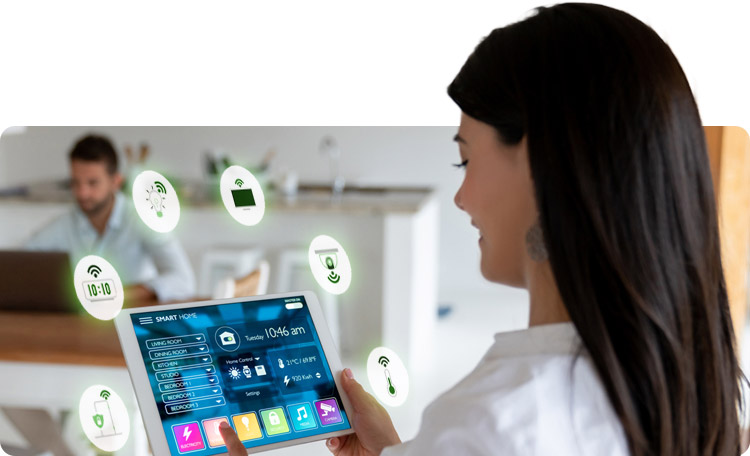
The 2026 global smart home market is at $95.8 billion, and is bound to reach $139.2 billion by 2032. American households want smarter homes. They want the installs. 30% of them will adopt these technologies into their residences by the end of 2026.
Smart thermostats, security cameras, video doorbells, automated lighting, and connected appliances are becoming standard home features. The problem is that most people buying these devices can’t install or integrate them properly.
Getting a smart lock, a Nest thermostat, a Ring doorbell, and a smart TV to work as a unified system isn’t something the average homeowner can figure out on random, lazy afternoon.
The smart home installation service market is valued at $4.13 billion in 2026 and is growing at 14.2% annually through 2035. Most local markets have no dedicated specialist to serve them.
Big box retailers selling these devices offer no installation assistance. None that offers not only the service, but lasting support, a relationship between business and customer.
What To Do: If you’re in home services, electrical contracting, or tech support, smart home installation is a natural adjacent service with strong upsell potential. A single whole-home setup can run $1,500 to $5,000+, and recurring maintenance subscriptions add predictable revenue on top of that.
Related Read: Renewables are also among the booming trends, but only if you get there first. Here’s what you need to know about the Battery Energy Storage Market Trend US and how people are making money through Virtual Power Plants and their networks.
Find the Right Orbit and the Right Specialists for the Best Investments For 2026 to 2030
U.S. business owners who read lists like this do nothing with them promptly, not because the ideas are bad, but because execution requires time and operational room they don’t currently have.
A lot of the time, the edge goes to those who get moving while everyone else is stuck thinking about it. That’s where remote hiring becomes a practical competitive advantage.
Remote Staff has been connecting SME with skilled remote professionals for over 18 years. If having the right people is what’s standing between you and any opportunity on this list, that’s a good place to start. We take care of the vetting, onboarding, payroll, and HR admin work, and engagement, whether full-time or part-time, is up to you.
Related Read: You’re shoring up your team. You need to protect it, too. Take a look at why AI Scams and Deepfakes are aggressively targeting SMBs, how this relates to the Cybersecurity Skills Shortage.
FAQs About Wealth Building Trends for Remote SMEs
How to build wealth by not competing with trends? (What business is booming in 2026?)
Instead of competing with trends, serving the people it creates and solve the problems that follow it. For instance, you’re not building an EV, but installing the charger. You’re not making GLP-1 drugs; you’re feeding the people taking them. Your job is to be the service waiting when people need it.
Which is the best trend to make me rich in 2026? (What is going to make money in 2026?)
Choose any one of the above. Business owners who move quickly on a single opportunity with focused execution consistently beat those who spread attention across several. Pick the one closest to your existing skills or current customer base and business.
Are these opportunities still open in late 2026 or 2027? (What is the best business to start?)
Yes, and for most of them, the window stays open well past 2030. These are also the same ones booming in 2026. Near-zero keyword difficulty scores in categories with real search volume mean real markets that haven’t been claimed yet. Early movers get the referral relationships, the reviews, and the brand recognition, but a late 2026 entry is still early in most of these categories.
Do I need a background in the industry to work on business trends?
Not necessarily. Several of these, like EV charger installation, aging-in-place renovation, data center cleaning, smart home installation, have accessible certification programs that take weeks. What matters more than prior industry experience is proximity: the closer the opportunity is to what you already do or who you already serve, the faster you can move on it. Start there.
The Wealth Building Trends 2026 “Orbit” Is Where Your Money Is
The wealth creation trend itself has never been where the money accumulates for most business owners. Financial freedom has to do with the infrastructure around it and the services the trend demands. It’s the problems it creates and leaves unsolved.
That’s been true from the e-commerce boom to Airbnb, and it rings true throughout every one of the 10 trends above.
The data is straightforward, and the timing is now. What’s standing in between is execution.
U.S. SMEs that get rich from the next wave won’t be the ones chasing after market trends. They’ll be the ones waiting on the other side of the future of wealth management, ready for every person, business, and contract the long-term financial success sends their way
Want to build the team that helps you move on any of these opportunities? Reach out to us or Request a Callback today.

Vaune Everis Cura has always been a writer in the truest sense, drawn to the art both as a personal creative pursuit and as a profession. Her experience penning content across digital marketing spaces and collaborating with business owners and market shapers has broadened her craft to include strategic direction and SEO insight. Having spent years with the InterContinental Hotels Group before stepping boldly into freelancing, she understands that at the centre of it all are genuine, meaningful brand–customer relationships built on purposeful, human content.