

In This Blog:
- ➤You Have the Platform: Here’s Who Makes It Work
- ➤What Problems Does Marketing Automation Solve?
- ➤Signs You’re Ready to Hire a Marketing Automation Specialist
- ➤What Skills are Needed for Marketing Automation? (Prioritize in Your Search)
- ➤Steps to Hire Marketing Automation Specialists?
- ➤What is the Cost to Hire a Marketing Automation Consultant?
- ➤Hire a Marketing Automation Specialist Through Remote Staff
- ➤FAQs
Marketing automation has been around for decades, but most small and mid-sized businesses are still not using it to its full potential.
Or don’t know how.
Many have invested in platforms like Marketo, Eloqua, or HubSpot, never fully unlocking what the technology can do.
Many more have never even thought about how to hire a marketing automation specialist, because nobody told them that buying the tools was only half the job.
You don’t need a large marketing department to compete with bigger players. A well-built automation system closes the resource gap and beats the competition.
This is where you need to start planning how to hire a marketing automation specialist.
Discover what the role entails, what criteria to screen for, and how to structure the engagement for the right hire in this article.
Why should you hire a marketing automation specialist?
Key takeaway / Quick Answer
Hiring a marketing automation specialist gives your business a dedicated operator for the systems your platform was built to run. Without one, automation tools sit underused, leads move through the funnel inconsistently, and your marketing team spends skilled hours on work that should be handled by a configured system. A specialist fixes that disconnect by making the ones you already have work the way they were intended to.
You Have the Platform: Here’s Who Makes It Work
What does a marketing automation specialist do?
A specialist builds, manages, and optimizes the systems that keep your funnel moving without constant manual effort.
That means automated workflows across email, SMS, and web, lead scoring and segmentation that surfaces sales-ready contacts, CRM integration so data moves cleanly between teams, and campaign tracking that tells you what’s working and what isn’t.
They’re in charge of data hygiene and compliance, keeping your database clean and your campaigns on the right side of CAN-SPAM and CCPA.
No manual effort or errors when routing leads to sales.
What Problems Does Marketing Automation Solve?
You don’t hire a marketing automation specialist for better technology. You bring one in because something in your marketing operation is broken. Here’s what it looks like in practice:
Leads that go cold before sales ever touch them. Every hour between a form submission and a sales follow-up is a conversion window closing.
The Fix: A specialist builds the response logic that closes that gap automatically, so no leads are left idle, while your team is in meetings.
A CRM system full of contacts nobody acts on. A database is only useful if it’s clean, segmented, and connected to a system that knows what to do with each record.
The Fix: A specialist sets up the scoring and segmentation that turns a once-thought-dead list into an active pipeline.
Campaigns that run once and never get optimized. You launch a campaign. You watch it underperform. Then you move on.
The Fix: A specialist builds the testing and reporting infrastructure that tells you exactly what to change and why. This process ensures each campaign performs better than the last.
Marketing and sales work with different information. When your marketing platform and CRM don’t sync, both teams operate on incomplete data. Leads are duplicated or scored incorrectly. When it gets handed off to the next stage or team, they work on the wrong information.
The Fix: A specialist owns that integration and keeps both systems telling the same story.
A team spends skilled hours on unskilled work. Manually updating contact records, copying campaign sequences, and chasing down data between tools is execution work. What your team needs is strategy.
The Fix: A specialist automates that layer so your team’s time goes toward more meaningful work in the business.
Signs You’re Ready to Hire a Marketing Automation Specialist
How do you know it’s time? These four signals appear in businesses that are overdue for this hire.

#1. Platform Paralysis
Your automation platform is live, but most of its features sit untouched. You’re paying a monthly subscription for a capability your team doesn’t have the depth to configure. The workflows tab exists. Nobody’s touched it.
What To Do: Log into your platform and count how many core features are active versus idle. If more than half of your paid functionality remains unused, you’re running an expensive email tool. Nothing more.
#2. The Manual Funnel
Your team tracks leads in spreadsheets. They send follow-ups by hand and build reports from scratch every week. Attribution has no concrete basis. Documentation is unreliable.
What To Do: Ask your marketing team to list every task they repeat more than twice a week. If that list runs longer than five items, those tasks belong in an automated system.
#3. The Data Disconnect
Your CRM and your marketing platform aren’t connected. Data moves only when someone remembers to move it. Leads disappear between form submission and sales follow-up, and nobody can explain exactly where.
What To Do: Pull a sample of 20 recent leads and trace each one from first touch to sales contact. If you can’t complete that exercise cleanly, manual effort won’t fix your data infrastructure.
#4. Scaling Without Headcount
You need to reach more leads in less time. The math only works if your systems carry more of the load, and systems can only carry the load when someone builds them properly.
What To Do: Calculate what it would cost to hire two additional marketing coordinators to handle your current manual workload. Compare that figure against the cost of one specialist who automates that workload entirely. The answer usually settles the debate.
Hitting two or three in this list is enough of a signal to start the search.
What Skills are Needed for Marketing Automation? (Prioritize in Your Search)
Now for the more important question: once you’ve confirmed the need, what criteria are you using for screening?
The ideal candidate is part marketer, part data analyst, and part project manager
It’s easy to confuse someone who has logged time in a platform with someone who has actually done the work inside it.
Technical Skills
Platform familiarity is not the baseline. It’s workflow experience. It’s creating multi-step automated journeys, setting up segmentation logic, configuring lead scoring models, and working with behavioral triggers.
Mid-level and above should come in with CRM integration experience and at least a working grasp of API logic. This is HTML and CSS, too, as these signify the ability to edit email templates independently.
Compliance knowledge rounds it out, with CAN-SPAM, CCPA, and GDPR as priorities for someone managing contact databases at scale.
Platform Experience
HubSpot, ActiveCampaign, Klaviyo, or Mailchimp are platforms most growing businesses run on. For SMB and mid-market roles, prioritize candidates with hands-on experience in these tools.
For enterprise roles, review candidates’ experiences in Salesforce Marketing Cloud, Adobe Marketo Engage, Oracle Eloqua, or Pardot. This tier tells you that they’ve worked inside complex, high-volume, high-data environments.
Integration tool familiarity also signals that the candidate understands how platforms like Zapier, Make, or Segment connect.
Campaign Optimization and Analytics
You don’t want someone who runs tests. You want someone who knows what to do with the results. Strong candidates demonstrate experience with A/B testing, identifying where leads drop off and why, and attribution reporting that connects campaign activity directly to pipeline outcomes.
Related Certifications
Certifications are often a hit or miss. Some candidates have them because they’ve experienced the platforms first-hand. Others collect them without ever building a live marketing automation workflow. Use them not as a hiring decision on their own, but as a prompt to dig deeper.
Worth Noting: HubSpot Marketing Hub Certification, Adobe Certified Expert, Marketo Engage, and Salesforce Certified Account Engagement Specialist.
Soft Skills
It’s easy to overlook this other aspect of hiring. A strong specialist can catch errors before they compound. They document as they build. And they treat learning as part of the job because this space shifts constantly.
What to Do: Give candidates scenarios. Ask how they’ve collaborated with a previous team to pass data between systems. Ask if they’ve experienced coming across a new workflow trigger and how they were able to adjust.
Related Read: You’re familiarizing yourself with marketing automation. Good move. But you also need to be aware of the Risks of Over Automation. Avoid doing a “Kroger.” They lost billions because of it.
Steps to Hire Marketing Automation Specialists?
#1. Define Your Automation Goals
What do you need solved? Does it require the support of a lead nurturing automation specialist? A CRM and marketing automation specialist? A HubSpot marketing automation specialist?
The answer shapes everything: the job description, the interview questions, and the profile you’re screening for.
Illustration: Marcus runs a B2B consulting firm. His CRM is full of leads that never get followed up with because the handoff between marketing and sales is entirely manual.
He doesn’t need marketing automation campaign management and needs someone who can build the integration logic that gets leads to the right rep at the right time.
Knowing that before posting the job means screening for a completely different candidate.
#2. Write a Clear Job Description
Be direct about the platform they’ll work in, the workflows they’ll own, and the metrics they’ll be held to: campaign automation builds, lead scoring management, CRM sync maintenance, and performance reporting.
The more specific, the less filtering you’ll need later.
#3. Screen for Platform Experience
Look for evidence of builds, such as workflows configured, campaigns managed, and problems diagnosed. If a candidate struggles to describe what they built and why, that tells you something before you’ve spent an hour in an interview.
#4. Conduct Technical and Strategic Interviews
Ask the candidate to walk through a workflow they built. Let them explain the logic, the edge cases, and the results.
Your goal is to get a glimpse of how the candidate decides what gets automated versus handled manually. Strong candidates answer with specificity. Candidates who speak only in generalities are worth pausing on.
What is the Cost to Hire a Marketing Automation Consultant?
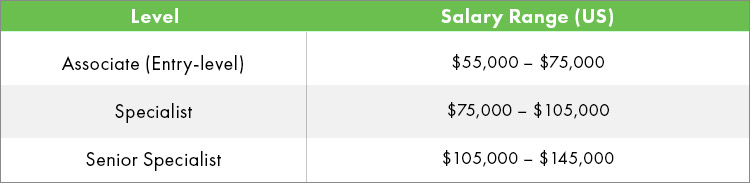
Whether you’re hiring full-time or on a contract basis, compensation varies depending on experience level and platform specialization. This marketing automation specialist salary table gives you an idea about:
How much does a marketing automation specialist make in the US?
Understand what the US market looks like as of 2025–2026:
How Much Does Marketing Automation Cost: Salary Comparison
Freelance or contract engagements: Hourly rates fall between $75 and $150, depending on experience and platform depth.
Specialists with enterprise certifications: Rates are at the higher end of said range, especially for Marketo Certified Experts and Salesforce Marketing Cloud Consultants.
Full-time hires at the senior level with a proven track record in B2B SaaS or e-commerce can push compensation beyond the ranges above. This is true, particularly when the role carries ownership over pipeline reporting and revenue attribution.
Hire a Marketing Automation Specialist Through Remote Staff
A US-based marketing automation strategist at the senior level costs between $105,000 and $145,000 annually before benefits and overhead. That’s a significant commitment. Depending on where your business is right now, it doesn’t necessarily need to be a full-time or local hire.
Remote Staff works specifically in this space, and our engagement model is straightforward:
Full-time, if automation is central to your growth engine. Part-time if you’re still building the foundation. Project-based, if you need a clean setup or migration handled and done.
We also take care of payroll, onboarding, and HR support, so the operational side of the hire doesn’t land on your desk.
Remote Staff gives you access to professionals at that same experience level at a fraction of that cost, with the talent based in regions with a different cost of living.
You’re paying less, not because the skill level is different, but because the talent market is.
Stop using online averages as you strategize around growing your team. Learn How to Calculate Outsourcing Cost US and use the Remote Staff Free Outsourcing Calculator Tool.
Related Read: How to create a policy for, and support Mental Health for Remote Workers.
FAQs for How to Hire a Marketing Automation Specialist
What are the qualities of a marketing automation specialist, and how should you evaluate them?
Evaluate candidates by putting them in a scenario. Ask them to walk through a workflow they’ve built, how they’ve handled a broken automation mid-campaign, or how they’d structure lead scoring for your business. Look for specific strategies and problem-solving skills rather than general theory.
Is a marketing automation certification worth it?
A certification is not a guarantee of expertise in marketing automation tools. Use it as a signal to prompt a deeper conversation about what the candidate has actually built, rather than using it as the sole reason to shortlist or pass on a candidate.
Local vs. remote hiring an automation specialist: How to decide?
For most growing businesses, a remote marketing automation specialist warrants a serious look. It offers access to a significantly wider talent pool and a cost model that doesn’t require the high overhead of a local-based salary commitment.
The Right Hire Makes the Platforms Work
When thinking about how to hire a marketing automation specialist, the real ask is finding someone who understands how to make those tools move your business forward.

The tools don’t run themselves. That’s the whole point of this hire. Get this hire right, and your marketing stack stops being a cost center you manage around.
Hire someone ready to build. Find that marketing automation specialist, or other roles, by talking to our team at Remote Staff. Request a Callback today.

Vaune Everis Cura has always been a writer in the truest sense, drawn to the art both as a personal creative pursuit and as a profession. Her experience penning content across digital marketing spaces and collaborating with business owners and market shapers has broadened her craft to include strategic direction and SEO insight. Having spent years with the InterContinental Hotels Group before stepping boldly into freelancing, she understands that at the centre of it all are genuine, meaningful brand–customer relationships built on purposeful, human content.