

Great leadership is not about doing it all. Rather, it’s about knowing when to step back and let their people lead.
It might sound simple, but many managers and business owners struggle to put it into practice. For many, leadership still equates to doing everything right, which often leads to micromanaging instead of delegating.
In this article, we will examine what good leadership really looks like, and how to delegate effectively.
What Is a Delegation Breakdown Audit?
A delegation breakdown audit identifies where delegation fails.
It examines the entire lifecycle of a task, from the initial instruction to the final delivery, and pinpoints where the process broke down.
Why Delegation Often Fails – Even With Great Teams
Delegating tasks is not as simple as it looks. You can delegate to talented, high-performing individuals and yet, your projects can still stall.
Why is this so?
Leaders often delegate tasks without providing context. Without understanding the “why,” even the best employees can end up in the wrong direction.
The Cost of Poor Delegation in Growing Businesses
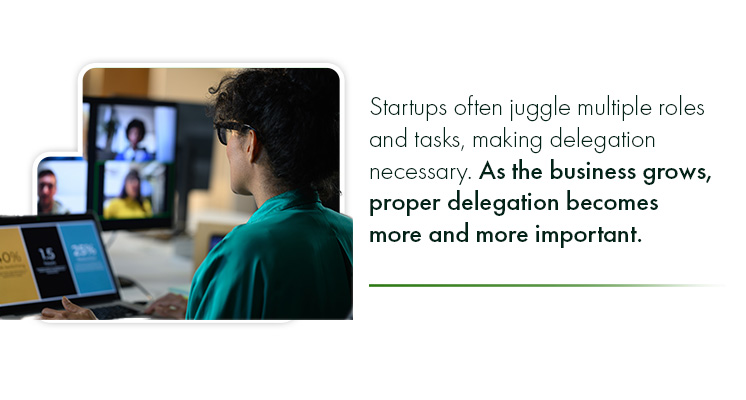
Startups often juggle multiple roles and tasks, making delegation necessary. As the business grows, proper delegation becomes more and more important.
When a leader fails to delegate effectively, every decision has to go through them.
This becomes especially challenging with high achievers, who value autonomy. When they are constantly micromanaged, they eventually leave for roles or startups where they can truly own their work.
3 Faces of Delegation Failure
How can you tell if your delegation is successful? And what does failed delegation look like? Here are three examples.
#1. Micromanagement: Over-Control Without Trust
A micromanager assigns a task but keeps their hands on the wheel.
This is common among leaders who believe things move faster if they do it themselves – or feel the need to be read into every single email when someone else handles it.
Illustration:
A marketing director hires a social media manager and asks for a week’s worth of posts.
Instead of letting the manager brainstorm and create, the director insists on approving every detail – changing hex codes by a single shade, rewriting captions, and even tweaking punctuation to match her voice.
If this continues, the manager will stop taking initiative and wait for the director to give exact instructions.
Meanwhile, the director will feel even more overwhelmed, doing the work herself while managing someone she believes is doing it “wrong.”
#2. Abdication: Dumping Work Without Direction
At the other extreme are abdicators.
They hand a complex project to a team member, often under the guise of empowerment, but provide only vague instructions like “do this” and then disappear.
They provide no context, no resources, and no clear explanation of what they want to achieve.
Illustration:
A founder tells his new operations lead that the company needs a better customer relationship management (CRM) system. He provides no budget, required integrations, or timeline.
A month later, he returns expecting results and is surprised to find his lead bought a $10,000 system that doesn’t even work with their accounting software.
Unsurprisingly, the founder gets upset and blames the lead. The lead, meanwhile, feels demoralized because he was simply trying to do what he thought was expected.
#3. Disconnection: Breakdown in Accountability and Follow-Through
Of the three, this is the silent killer. Unlike the first two examples, the employee is left unsure of what to do next.
In this case, the hand-off begins well, with clear direction. However, there are no milestone checks, no scheduled feedback, and no final review.
Illustration:
The manager delegates a client research report to her associate. The instructions were clear, but the manager got busy, and the associate hit a roadblock two days in. With no check-in, he assumed it wasn’t urgent and left the half-finished report, waiting for the manager to follow up.
Meanwhile, the manager assumed the report was being handled. On the morning of the client meeting, she asked for it, only to find the employee flabbergasted and the report unfinished.
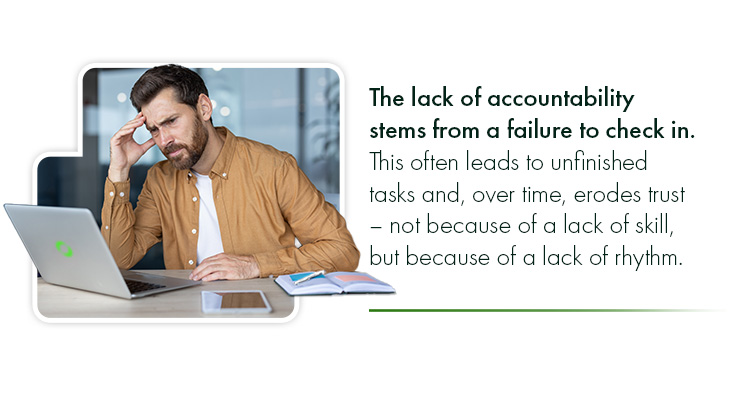
The lack of accountability stems from a failure to check in. This often leads to unfinished tasks and, over time, erodes trust – not because of a lack of skill, but because of a lack of rhythm.
Delegation Audit Checklist: What To Evaluate
Now that we understand what failed delegation looks like, let’s explore proper delegation using this delegation audit checklist.
Clear Roles and Expectations
Ambiguity is the number one killer of delegation. If “done” isn’t clearly defined, your team will be left guessing. Always ask yourself:
- Did you define the outcome rather than just the steps?
- Does the team member understand how this task fits into larger company goals?
- Were explicit benchmarks provided?
- Was there a clear deadline, or just a vague “as soon as possible?”
Proper Balance of Authority vs. Responsibility
Always balance accountability with authority. Let your team members own their work, while making it clear that you’re available to provide guidance and direction.
For instance:
- Does the person have the power to make decisions without your approval?
- Do they have the logins, budget, or personnel access required to finish the job?
- Are they authorized to speak on your behalf to stakeholders or other departments?
Task Matching Based on Skills and Readiness
Delegation requires intention. Not every task should be given to every person.
Be deliberate about who you delegate to, not just because they are available, but because they are capable. Here are some indicators:
- Does the person have the technical competence, or do they need training first?
- Did you verify their current workload before adding this, or did you just pile it on?
- Is the task too easy or too hard? Ideally, delegation should sit in the middle.
Feedback Loops and Progress Monitoring
It’s not enough to hand off tasks properly. You also need to ensure they are completed smoothly, without bottlenecks, by checking in and tracking progress along the way.
Hence:
- Were there scheduled pit spots to check progress before the final deadline?
- Did the team member feel comfortable flagging a problem early, or did they hide it?
- Once the task is finished, did you provide a feedback loop to discuss what went well and what could be improved?
Fixing the System: Steps to Delegate Better
Now for the more important question: how can you delegate better?
True leadership treats delegation as a repeatable system, not a one-off favor. Leadership doesn’t end after assigning a single task. As your business grows, you’ll need to delegate more often and across more responsibilities – making a proper delegation system essential.

Set Clear Outcomes, Not Just Tasks
Delegate tasks like creating a grocery list for someone else. Be as clear, specific, and as descriptive as possible.
For example, instead of simply asking your lead to clean up the CRM data, say: “By Friday, I want the CRM to have zero duplicate entries and verified phone numbers for our top 50 leads so the sales team can call them without errors.”
Create Simple Feedback Systems
You don’t need to know every detail of a task.
High-growth teams often use “low-friction” feedback loops, where members provide simple progress updates instead of holding frequent catch-up meetings.
Have your team spend 15 minutes once a week writing a report that takes you five minutes to read about:
- Main accomplishments;
- Priorities for next week; and
- Roadblocks/bottlenecks.
You can also use simple color codes in your project management tool, such as:
- Green – On track, no help needed;
- Yellow – At risk, need a quick steer; and
- Red – Stalled, requires manager intervention.
Provide Ongoing Coaching, Not Just Instructions
Leaders should show their team how things are done, not just assign tasks.
When a team member comes to you with a problem on a delegated task, don’t give the answer immediately. Encourage them to think and propose solutions. You might ask, “What is your proposed solution, and what do you need from me to execute it?”
This approach guides them to make better decisions instead of just repeating the problem. Done consistently, it helps them think on their feet and confidently handle similar challenges in the future.
When to Bring in Help: Strategic Delegation at Scale
Like any skill, delegation can be practiced and improved over time. However, there comes a point when optimizing your current team isn’t enough, and you need to bring in additional help.
Internal Ops Managers vs. External Support
Deciding between using your current manager or hiring an external partner depends on the complexity and consistency of your needs.
An internal operations manager is ideal for long-term strategy, culture, and people management. However, because they already have existing responsibilities, full onboarding may take 3–6 months.
External support, on the other hand, works well for specialized tasks, project-based work, or cost efficiency. Hired for a specific purpose, they can start delivering results within days.
Common Signals You Need Staffing Support
If you’re unsure whether it’s time to expand, see how many of these Red Flags of Scale apply to you:
- You spend weekends doing the work because weekdays are full of managing others.
- You keep explaining the same process to different people since there’s no Ops lead to document it.
- You are missing follow-ups with quality leads because your inbox is full of administrative clutter
- Your one-year goals haven’t changed in six months because you haven’t had time to innovate.
- By 2 PM, you’re mentally drained from answering constant “quick questions” from your team.
If more than three of these apply, your current delegation of authority (DOA) is no longer sustainable and it’s time to take action.
How Remote Staff Helps With Strategic Delegation
For the past 18 years, Remote Staff has been helping Western business leaders delegate effectively.
Instead of spending weeks sifting through resumes, Remote Staff gives you immediate access to pre-vetted talent with the exact skills you need—like delegation experts who can step in as your Ops Manager.
For project-based needs, they offer flexible options. You can scale support up or down with your business cycle, ensuring the right number of hands on deck without the overhead of a large office.
Most importantly, Remote Staff helps reduce micromanagement by providing trained remote staff who already know what needs to be done.
Plus, a dedicated account manager handles all administrative tasks – onboarding, salaries, and other employee needs – so you can focus on what you do best: growing your business.

Conclusion: Turn Delegation From Liability to Superpower
No leader, no matter how skilled, succeeds by doing everything alone. Great leadership isn’t just about reaching the top. It’s about helping others get there, too.
To build a successful business, focus not only on great products and services but also on investing in your people. Delegate responsibility to foster accountability, but always provide guidance.
When you delegate consistently, correctly, and intentionally, real success will follow.
Looking for great people to help you build your business? Call us today or request a call back now.

Syrine studies law while working as a content writer. Outside of writing and studying, she tutors, plans events, and browses social media. In 2021, she published Stellar Thoughts.